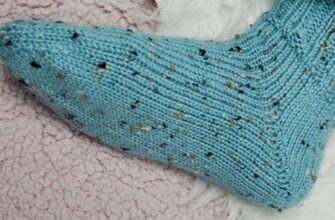
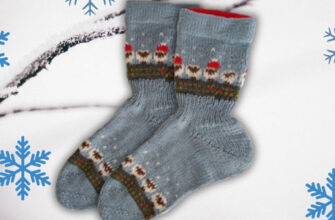
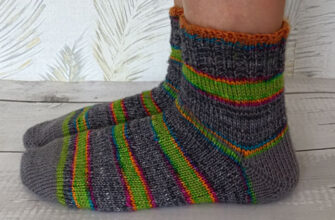
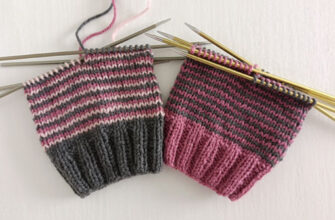
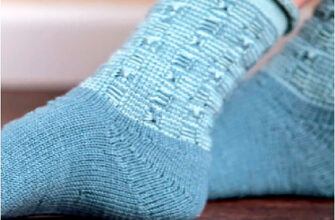
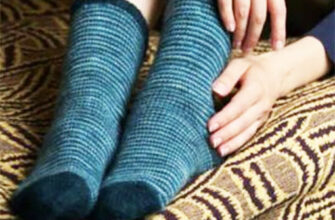
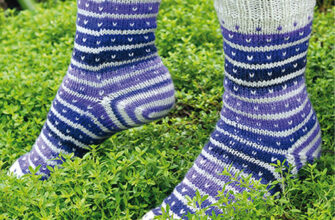
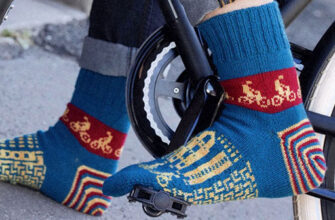
Socks with an afterthought heel differ from traditional sock construction in that they are worked entirely in the round. In most cases, the heel is knitted last, after the main body of the sock is complete. That is why it is called an “afterthought” heel.
The heel is usually worked using waste yarn or additional cast-on stitches, which may be created with either a provisional or standard cast-on. Both methods are discussed in this article.
The afterthought heel is also known as a replaceable heel, removable heel, or “grandmother’s heel.” Thanks to the well-known knitter Elizabeth Zimmermann, it became widely known as the afterthought heel.
- Advantages of the Afterthought Heel
- The “Afterthought Heel” by Elizabeth Zimmermann
- Basic Rules for Knitting an Afterthought Heel Using Waste Yarn
- Basic Rules for Knitting an Afterthought Heel Using a Provisional Cast-On
- Provisional Cast-On Using Waste Yarn
- If the Heel Is Worked After the Main Part of the Sock
- If the Heel Is Worked Immediately
- Provisional Cast-On Without Waste Yarn
- Types of Afterthought Heels
- Peasant Heel
- 5 Variations of the Peasant Heel
- Heel Inspired by the “Boomerang” Heel
- Variations of the Boomerang-Style Heel
- Propeller Heel
- Socks with a Star Heel
- Conclusion
Advantages of the Afterthought Heel
Socks with an afterthought heel are ideal for knitters who prefer working in the round. This construction method is simple and eliminates the need for purl rows and short rows, making the knitting process much easier.
The afterthought heel allows you to:
- Knit complex sock patterns in one continuous piece from cuff to toe (or toe to cuff) without interrupting the pattern to shape the heel.
- Preserve color sequencing when working with self-striping or hand-dyed yarn. Achieving the same effect with a visually similar boomerang heel is almost impossible.
- Easily replace a worn heel when needed. However, removing the old heel requires care, since it can be difficult to pick up all the live stitches without dropping them.
- Adapt the fit of the sock to different foot shapes by adding an instep gusset.
- Knit socks either cuff-down or toe-up using the same heel construction. Traditional heel techniques are much more difficult to adapt for toe-up socks.
The “Afterthought Heel” by Elizabeth Zimmermann
In her book Knitting Without Tears, Elizabeth Zimmermann gives several recommendations for knitting the so-called afterthought heel:
- Knit the sock completely without the heel and toe. Then use nylon yarn to finish the toe.
- After that, cut one stitch in the area where the center back of a traditional heel would normally be located. Unravel the row in both directions from the cut for approximately one-third of the sock circumference on each side. Place the live stitches onto needles, join the wool yarn together with the nylon yarn, and knit 3 rounds. Then work another toe, shaping decreases along the sides of the ankle.
- Try on the finished sock, and you will realize that the second toe is actually the heel.
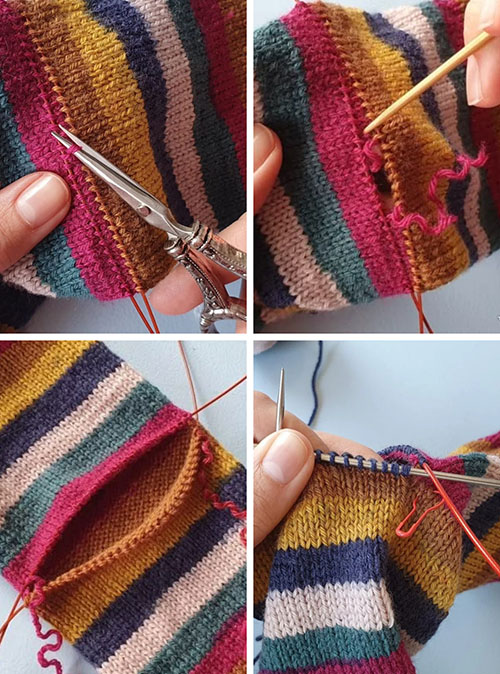
Some patterns suggest working this technique across only half of the stitches instead of two-thirds. However, this often creates a heel that is too small, and the sock may wear out next to the heel in areas that are not reinforced with nylon yarn.
One of the greatest advantages of the afterthought heel is how easy it is to replace as soon as the first signs of wear appear.
Basic Rules for Knitting an Afterthought Heel Using Waste Yarn
To knit socks with an afterthought heel, knitters often use a contrasting waste yarn. Once the leg reaches the desired height, the back half of the sock stitches is worked with the waste yarn, while the main yarn remains attached.
For a more comfortable fit, the number of heel stitches can be increased by borrowing stitches from the front of the sock or by adding an instep gusset. In most cases, adding 3 or 5 stitches on each side is enough, depending on the sock size and foot shape.
After the stitches have been worked with the contrasting yarn, cut the waste yarn, leaving tails approximately 5–10 cm long on both sides. Continue knitting with the main yarn, working directly over the waste-yarn section.
Once the sock is completely finished, the heel can be worked. Follow these steps:
- Return to the row worked with waste yarn.
- On the right side of the sock, pick up all stitches located directly below the waste-yarn row.
- When using double-pointed needles, divide the stitches evenly between two needles.
- When using the magic loop method, all stitches may be picked up onto a single needle.
- Turn the sock and repeat the previous step, picking up the stitches on the opposite side of the waste yarn.
- Distribute the edge stitches located before and after the waste-yarn section onto four needles, placing one stitch on each needle.
- If you are using circular needles, pick up the first side onto the needle tip, slide the stitches onto the cable, and then pick up the stitches on the second side.
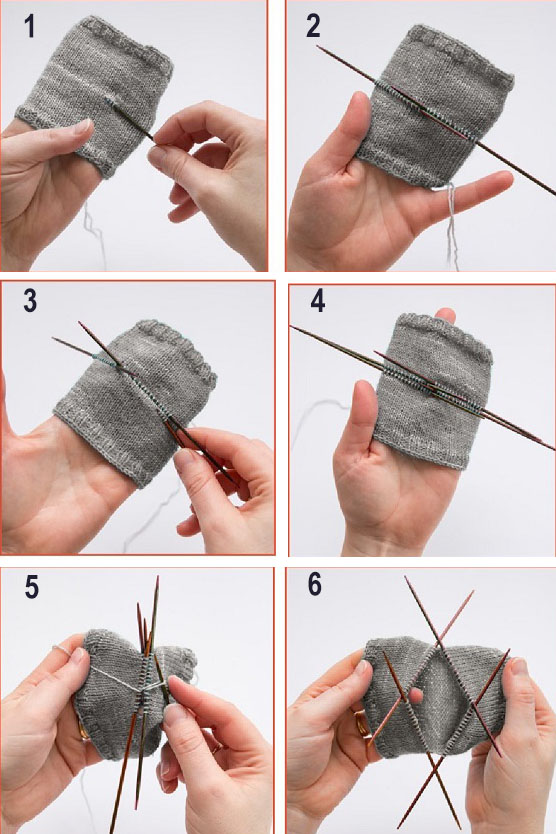
Carefully remove the waste yarn, making sure not to miss any live stitches.
The stitches are now arranged on the needles and ready for knitting the heel.
Socks with a replaceable heel are most commonly worked using contrasting waste yarn, as this is considered the simplest and most practical method for knitting an afterthought heel.
Basic Rules for Knitting an Afterthought Heel Using a Provisional Cast-On
Socks with an afterthought heel are often knitted using a provisional cast-on. This method blends seamlessly into the stitch pattern and makes the beginning of the heel almost invisible. A provisional cast-on may be worked either with or without waste yarn.
The term “afterthought heel” is somewhat conditional in this case. In practice, the heel can be knitted immediately after completing the provisional cast-on, and the rest of the sock can then be continued afterward.
Provisional Cast-On Using Waste Yarn
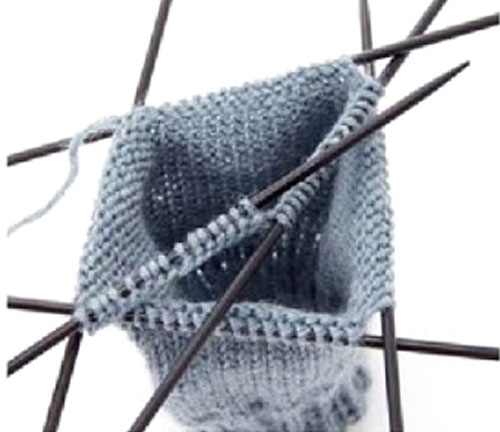
The stitches for the heel are cast on using waste yarn. This can be done either with knitting needles or a crochet hook.
For a better fit, the heel is usually worked over more than half of the total number of sock stitches. To achieve this, part of the stitches from the top of the foot may be included, or an instep gusset may be worked in advance.
If the Heel Is Worked After the Main Part of the Sock
At the point where the heel should be located, place the stitches from the back half of the sock onto a holder or spare needle.
Using waste yarn, cast on the same number of stitches onto two free double-pointed needles or one circular needle.
Join the newly cast-on stitches to the stitches from the front of the foot and continue knitting the main part of the sock in the round.
After the sock is finished, transfer the held stitches back onto the needles.
Unravel the waste yarn while simultaneously picking up the released stitches onto the needles.
The heel is then worked using the resulting live stitches.
If the Heel Is Worked Immediately
The stitches from the top of the foot are not involved in shaping the heel, so they are placed on a holder.
Using waste yarn, cast on additional stitches onto the freed needles. The number of stitches cast on should match the number of stitches placed on hold.
After casting on, the temporary stitches replacing the top-of-foot stitches are joined to the stitches from the back of the foot to form the heel.
The heel is worked in the round using the main yarn. Once the heel is complete, the waste yarn is removed. The released stitches are transferred onto the needles and used to knit the sole of the foot.
The top-of-foot stitches are then returned from the holder to the needles and brought back into the work.
Provisional Cast-On Without Waste Yarn
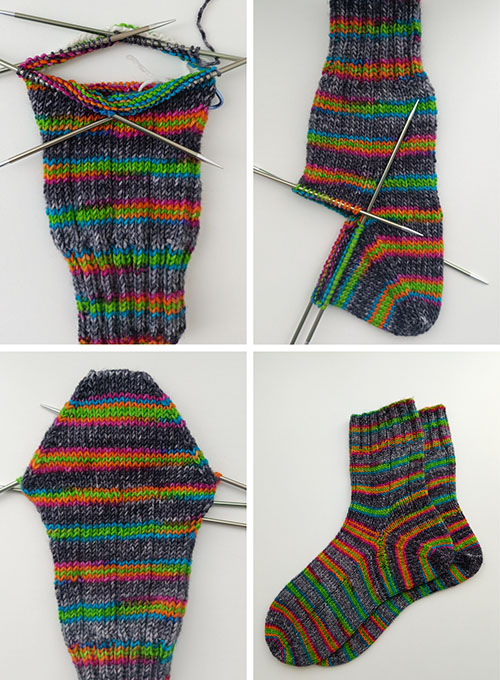
Socks with an afterthought heel can also be knitted using a provisional cast-on with live stitches, without using waste yarn. The technique is similar to the method worked with waste yarn. The only difference is the cast-on method itself.
If a standard cast-on is used for the provisional stitches, the heel stitches are later picked up from the strands at the base of the cast-on edge after the main part of the sock has been completed. Detailed instructions for casting on and picking up stitches can be found in our tutorial: AGGIE’S SIMPLE CAST-ON FOR TOE-UP SOCKS.
With double-sided cast-ons such as the figure-eight cast-on, Turkish cast-on, or Judy’s Magic Cast-On, two rows of stitches are created simultaneously. One set of stitches is placed on a spare needle, while the second set is worked immediately.
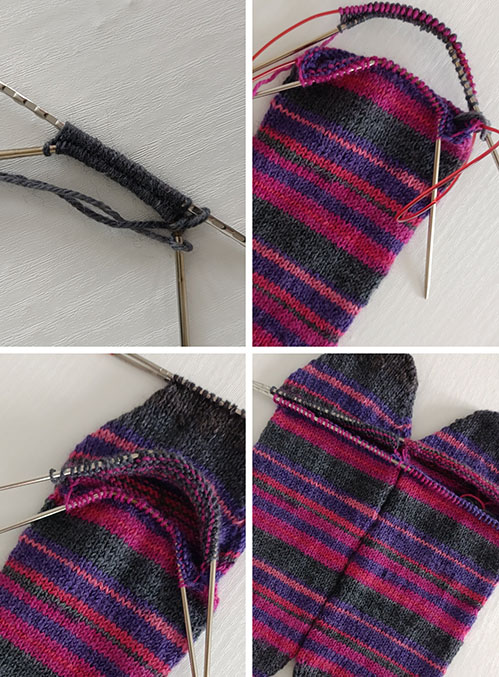
After the main part of the sock or the heel is finished, the held stitches are returned to the needles from the spare needle and brought back into the work.
Types of Afterthought Heels
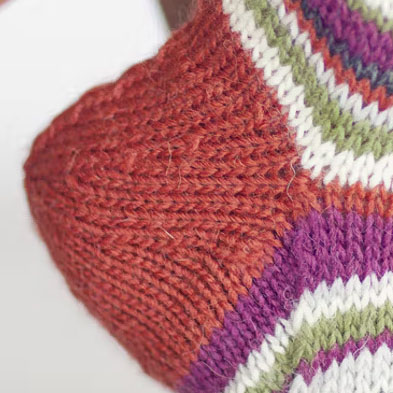
Socks with an afterthought heel differ from traditional sock construction in that the heel is shaped in the round using the same principles as toe shaping. Almost any toe construction can be adapted for knitting an afterthought heel.
Peasant Heel
The peasant heel is considered the most popular type of afterthought heel. It is shaped similarly to a wedge toe. The heel stitches are divided evenly in half. Decreases are worked in the round according to the same basic method:
- knit all stitches;
- work the second and third stitches of both the upper and lower sections together with a left-leaning decrease;
- work the two stitches before the last stitch together with a right-leaning decrease.
The decreases are worked every other round until the heel reaches the desired size.
5 Variations of the Peasant Heel
- A heel shaped like a classic wedge toe without an instep gusset. The heel opening is created using waste yarn. The heel is finished with four remaining stitches, which are closed using a tapestry needle. Read more.
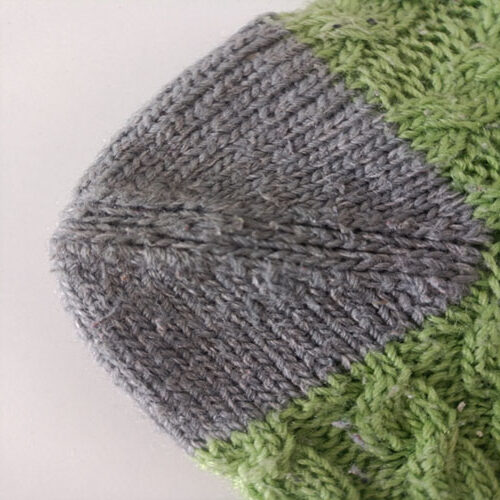
- A heel shaped like a rounded wedge toe worked in self-striping yarn. The heel stitches are cast on using waste yarn. The heel is finished when one-third of the stitches remain and is closed using Kitchener stitch. The foot is knitted after the heel is completed. Read more
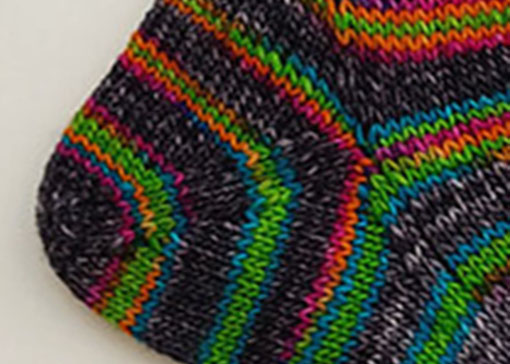
- A striped heel worked in two colors of yarn and shaped like a rounded wedge toe. The heel opening is created with waste yarn. The heel is knitted after the sock is fully completed. Read more
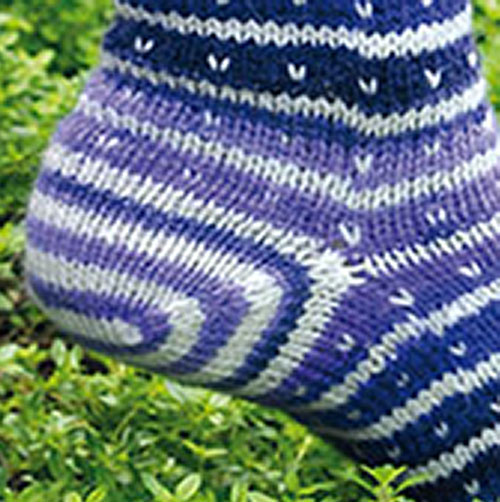
- A solid-color replaceable heel blends seamlessly into socks knitted using the Helix technique with multicolored yarn in three shades. The knitting of the main pattern is not interrupted for the heel and toe construction, as these elements are worked after the main body of the socks has been completed. Read more

- A striped heel worked in three colors of yarn using a spare needle to hold the stitches from the back of the foot. The work then continues using the provisional cast-on stitches. Read more
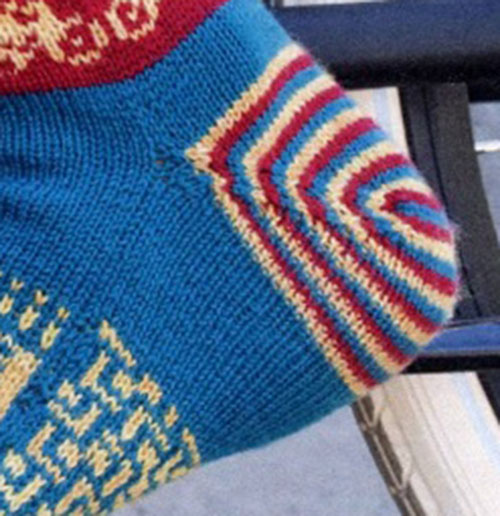
- A heel worked using the peasant heel principle but with a different decrease rhythm. The decreases are worked:
- every 4th round — once;
- every 3rd round — twice;
- every other round — twice;
- every round — once.
The remaining stitches are threaded onto a tapestry needle, stitched through several times, and pulled tight. This creates a decorative knot resembling a propeller at the end of the heel. Read more

Heel Inspired by the “Boomerang” Heel
Socks with an afterthought heel that visually resembles a boomerang heel are an ideal choice for self-striping yarn. The heel is worked in the round, and the decreases are made along the outer edges of the foot by knitting three stitches together. As with the peasant heel, each decrease round reduces the total stitch count by four stitches. Unless otherwise specified in the pattern, decreases are worked every other round. The heel is completed after two-thirds of the stitches have been decreased. The remaining stitches are joined using Kitchener stitch.
Variations of the Boomerang-Style Heel
- A heel with decorative left-leaning decreases. The heel is started using Judy Becker’s Magic Cast-On. The foot is knitted after the heel is completed. Read more
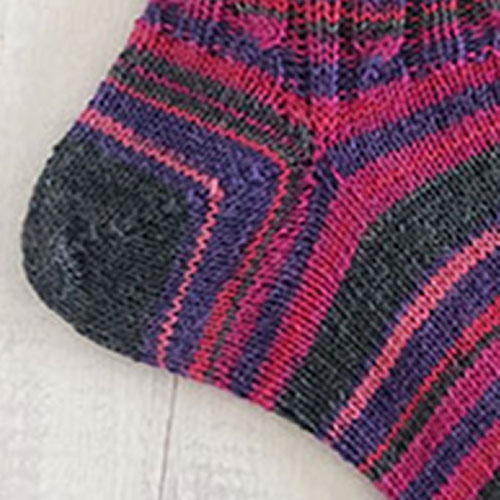
- A heel with decorative decreases and a central stitch running down the middle. The socks are worked using waste yarn in the heel section. Read more
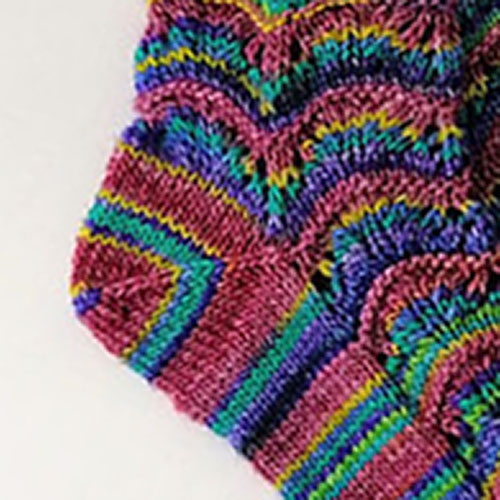
Propeller Heel
Socks with a propeller-style afterthought heel are knitted using waste yarn. The heel is shaped similarly to a propeller toe. An instep extension is added for extra depth and comfort. Decreases are worked every other round until six stitches remain. The remaining stitches are gathered tightly with a tapestry needle. Read more
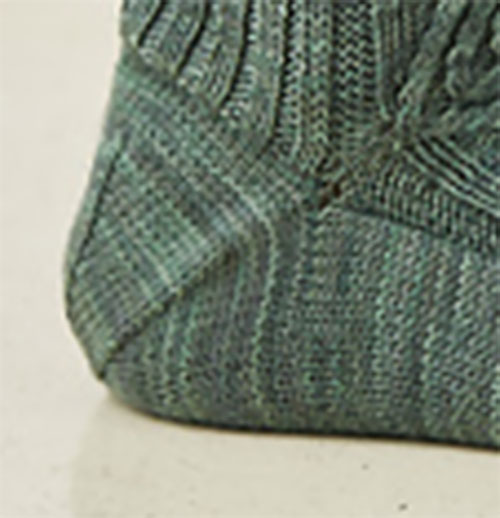
Socks with a Star Heel
Socks with an afterthought heel and a star-shaped toe are knitted using waste yarn. Decreases are worked every fourth round on each needle: two decreases are made in the middle and at the end of each needle by knitting two stitches together. The stitch count on each needle should be even. Read more
Conclusion
This article describes 10 popular ways to knit socks with an afterthought heel. It includes detailed explanations of how to shape an afterthought heel using waste yarn and provisional cast-on methods. The article also highlights the main advantages of using afterthought heels in sock knitting.