The classic cast on method, also known as the long-tail cast on, is one of the most popular and versatile ways to start knitting. It creates a neat, flexible edge that works well for a wide range of projects—from socks and mittens to sweaters and scarves.
By mastering this essential technique, you’ll be able to confidently begin almost any knitting project and achieve a clean, professional-looking edge from the very first row.
How much yarn do I need for a long-tail cast on
A common rule is to measure about 2.5–3 times the width of your finished piece. If you run out of yarn, you’ll need to start again, so it’s better to leave a longer tail.
How to Do the Long-Tail Cast On (Step-by-Step)
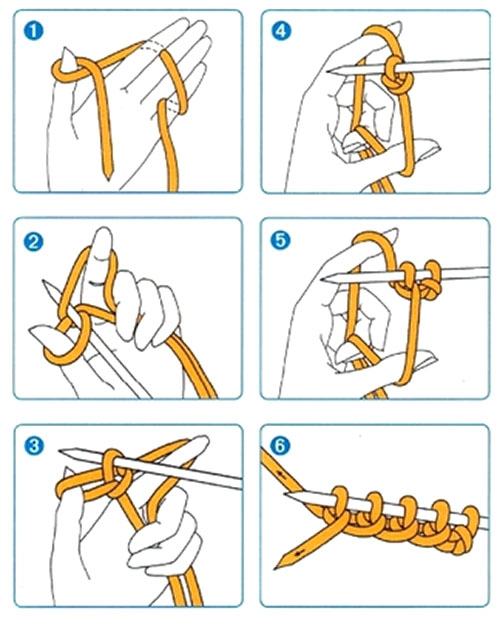
- Wrap the working yarn around your left pinky finger. Pass the yarn between your index and middle fingers to the back of your hand, then bring it over your index finger toward the palm. Wrap the yarn around your thumb from front to back.
- Hold both yarn ends firmly. Insert the needle from below into the loop on your thumb. Then bring the needle behind the strand coming from your index finger.
- Pull the yarn through the loop on your thumb. Release the loop from your thumb.
- Use your thumb to catch the yarn tail toward yourself, tighten the stitch, and lift your thumb back up.
- Repeat steps 2–4 once more. You now have two stitches on your right needle. Insert the needle again into the loop on your thumb, pull the yarn through, and tighten.
- Continue in the same way until you cast on the required number of stitches.
Conclusion
I hope that after following this guide, you will easily learn how to cast on stitches using the classic method, also known as the long-tail cast on. Another popular way to cast on stitches Long Tail Tubular Cast On.
What is the long-tail cast on in knitting?Add your title here
The long-tail cast on is a popular knitting technique used to create the first row of stitches. It produces a neat, slightly elastic edge that is suitable for most knitting projects.
Is the long-tail cast on good for beginners?Add your title here
Yes, the long-tail cast on is beginner-friendly once you understand the hand positioning. It may take a little practice, but it’s one of the most useful techniques to learn early in knitting.
Why is my long-tail cast on too tight?Add your title here
If your cast on edge feels tight, try loosening your tension or using a larger needle for casting on. Tight stitches can make it difficult to knit the first row.