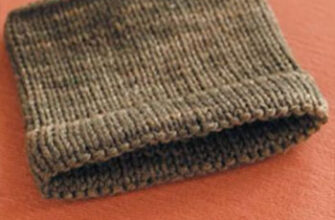
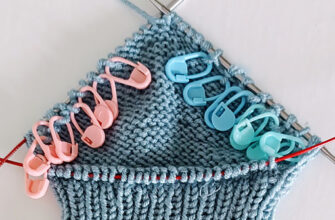
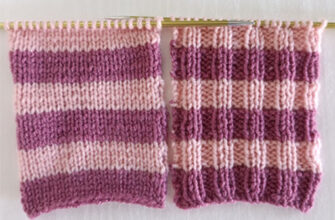
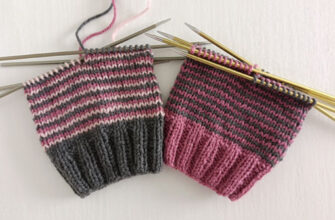
In stockinette stitch, the Kitchener stitch (grafting) is typically worked with a tapestry needle through live stitches. When executed correctly, the seam is completely invisible and gives the garment a neat, professional finish.
The Kitchener stitch is used to join knitted pieces and to repair knitted fabric. Grafting across live stitches is indispensable when shortening parts of a garment. During restoration, the damaged section is removed and replaced with a newly knitted piece.
Before seaming, it is recommended to knit two additional rows along the edge. Then steam the pieces through a damp cloth and allow them to dry. After that, unravel the extra rows. The stitches will lie evenly, making them much easier to graft.
The seam is worked on the right side from right to left using the same yarn that was used to knit the garment. This technique is what makes the seam invisible.
Kitchener stitch
Below is the sequence for grafting two pieces worked in stockinette stitch using live stitches:
1 Secure the yarn on the wrong side of the lower piece
2 Insert the needle purlwise into the first stitch of the lower piece (from the wrong side).
3 Insert the needle purlwise into the first stitch of the upper piece (from the wrong side).

4 Reinsert the needle knitwise into the first stitch of the lower piece (from the right side).
5 Then insert the needle purlwise into the second stitch of the lower piece.

6 Return to the first stitch of the upper piece and insert the needle knitwise (from the right side).
7 Insert the needle purlwise into the second stitch of the upper piece.
8 Insert the needle knitwise into the second stitch of the lower piece and draw it through the third stitch of the lower piece purlwise to the right side.
9 Reinsert the needle knitwise into the second stitch of the upper piece, then insert it purlwise into the third stitch of the upper piece.
10 Repeat these steps to the end of the row.

The stitches formed by the seam must exactly match the size of the knitted stitches; only in this case will the seam be completely invisible.
We hope that after studying this guide, you will be able to confidently work the Kitchener stitch in stockinette using a needle.
Read our other materials: